How to commit a post-colonial murder by Nina McConigley
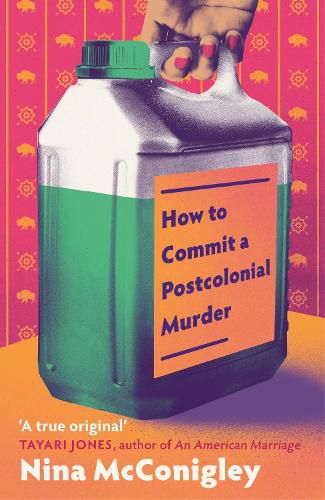
Trying to find the start of the problem and somewhere to lay the blame for the murder they commit, two teenage sisters consider colonialism, the splitting of India and Pakistan, the splitting of identity in their interracial family, the splitting of brown from white in the classroom and in the small rural American town, and the splitting of themselves. Georgie Ayyar and her sister Agatha Krishna have always been ‘Other’, the brown girls from somewhere else.
Nina McConigley’s novel describes a year in the lives of the two girls, but the chronological sequence is also interspersed with conversation direct to the reader dispelling predictable expectations of this story of immigrant isolation in a rural setting. They are an Indian American family, but there are no mangoes, saris, ubiquitous spicy food, wild animals, poverty, exotic religion, cows etc. but there is brownness, the Other, and what happens when people are split.
The sisters Georgie and Agatha Krishna are close, united by their shared experience growing up ‘Other’ in an unattractive part of Wyoming. Then when their mother’s much loved younger brother, Vinny Uncle, and his family come from India to live with them, their lives are disrupted. Vinny Uncle brings another kind of splitting, a secret that they are not to share with anyone, a secret that leads them to planning his murder.
McConigley deals with serious issues but she cleverly manages to bring a bit of lightheartedness and humour by including conversations with the reader, step-by-step instructions and lists, and best of all, the kind of teen magazine quizzes that everyone has been drawn into at some time: how to know if a boy likes you; how to know if you’re ready for a sexual relationship; is he bad for you; do you have what it takes to kill?
I was completely absorbed in this novel with its unusual approach to a much explored theme of sexual abuse. McConigley manages to do something completely different. She absolutely captures the turmoil of the girls’ experience, the silent cries of [Help me] and [Mayday! Mayday!] inserted in the text. The novel as a whole is an adventurous and original approach that works really well. I could easily read it all over again. Highly recommended.
Themes: Colonialism, Race, Indian people, Sexual abuse, Murder, Sisters.
Helen Eddy